Democracy, Identity & National Security
Research on belonging, public trust, and democratic life after 9/11
Rachel’s early research examined how national security policy, immigration, identity, and belonging shape democratic trust. At Stanford, she led the Muslim American National Opinion Survey, one of the first nationally representative surveys of Muslim Americans in the United States.
Combining survey data, interviews, and policy analysis, her work explored how communities experience government institutions, how trust is built or eroded, and how democratic societies navigate security concerns while protecting belonging and equal citizenship. This research culminated in peer-reviewed publications and the book Muslims in a Post-9/11 America, published by the University of Michigan Press.

Muslims in a Post-9/11 America examines how Muslim Americans experienced national security policy, law enforcement, belonging, and political life in the years after 9/11.
Drawing on one of the first nationally representative surveys of Muslim Americans, along with extensive interviews, the book challenges narrow portrayals of Muslim American communities as homogeneous, isolated, or politically suspect. It shows a diverse population shaped by race, ethnicity, immigration history, religious identity, and generational experience.
The book’s central argument is about democratic trust: policies designed in the name of security can weaken relationships between communities and government when they are built on suspicion rather than understanding and empirical data. Rachel argues for public policy and law enforcement approaches that protect security while strengthening trust, belonging, and equal citizenship.
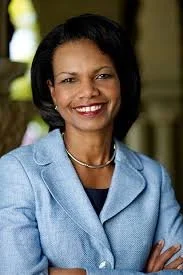
“This work makes a significant contribution to the field, not only through its substantive findings on trust in law enforcement but also because it is one of the few nationally representative surveys of Muslim Americans. The insights in this book will help us assess where we are as a nation and where we need to go.”
— Condoleezza Rice, Stanford University, former U.S. Secretary of State & National Security Advisor
“Gillum provides a compelling, well-researched, and sophisticated understanding of the distressing impact Islamophobia has had on the Muslim American community. Gillum engages American popular and mainstream convictions that feed into today’s existing Islamophobic climate. Drawing on original surveys of Muslim and non-Muslim Americans, Gillum finds that there are very few differences between Muslim and non-Muslim Americans on variety of attitudes related to violence, terrorism, and patriotism. This is an excellent and timely book which should be widely read.”
— Amaney A. Jamal, Princeton University
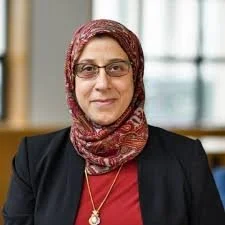
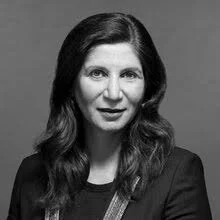
“This is the first study that I have seen that has parsed generational and ethnic/racial differences in attitude among Muslim Americans rather than viewing these communities as a monolith . . . This book combines both the statistical angle and interviews in an illuminating way.”
— Faiza Patel, Brennan Center for Justice, New York University School of Law
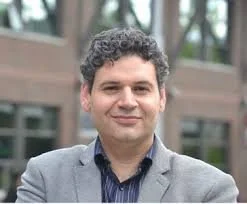
“Muslims in a Post- 9/11 America is a lucid examination of the attitudes of American Muslims toward U.S. counterterrorism and other policies that have heightened levels of racialization, surveillance, and discrimination. Drawing on empirical evidence, Gillum argues that policies fueled by religious profiling and discriminatory suspicion undermine their own efficacy. The book provides important contributions to the study of American Muslims, their experiences, and how the U.S. government has viewed them and targeted them unjustly.”
— Karam Dana, University of Washington Bothell & Founding Director, American Muslim Research Institute
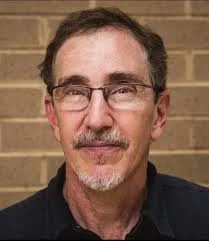
”Rachel Gillum combines sophisticated survey analysis and in-depth interviews to examine one of the most important civil rights issues in the United States today: the widespread and unfair treatment of Muslim Americans as potential terrorists.”
— Charles Kurzman, University of North Carolina at Chapel Hill
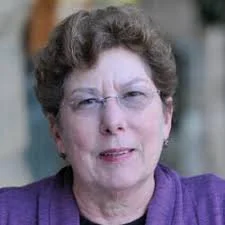
“Rachel Gillum’s excellent book could not be more timely and important at this stage in American politics. It is the definitive account of who American Muslims are and what they think, a much-needed antidote to prejudice and misconception, and a clear warning about the unintended consequences of counterterrorism policies.”
— Martha Crenshaw, Stanford University, Senior Fellow at the Freeman Spogli Institute for International Studies
Select Research & Commentary
-
![]()
Understanding Muslim-American Views towards U.S. Law Enforcement
Migration & Citizenship
Research on integration, law enforcement trust and expectation of unfair treatment.
-
![]()
Multidimensional Measure of Immigrant Integration
PNAS
Stanford study introducing the IPL Integration Index, a tool for measuring immigrant integration.
-
![]()
Interviewer Effects in the Islamic World
Politics & Religion
Study of how perceived interviewer religiosity affects survey responses in Egypt.
-
![]()
Book Review of The Politics of the Headscarf in the United States
Perspectives on Politics
Rachel Gillum reviews research on how Muslim women’s choice to wear the headscarf shapes experiences of belonging, discrimination, political participation, and citizenship in the United States.
-
![]()
Why the NYPD’s decision to drop a unit that spies on Muslims may help counterterrorism
Washington Post
Analysis on how to rebuild trust between Muslim communities and law enforcement.
-
![]()
Review of Islamophobia and Racism in America
Political Science Quarterly
Rachel Gillum reviews Erik Love’s account of how Islamophobia operates through race, advocacy strategy, and the political experiences of Arab, Muslim, Sikh, and South Asian American communities.
-
![]()
Muslims in America
Scholars Strategy Network
Rachel Gillum discusses how post-9/11 national security policies shaped public perceptions of Islam, targeted Muslim American communities, and raised broader questions about fear, discrimination, and democratic belonging.
-
![]()
Religious Fundamentalism in America
Washington Post
Rachel Gillum analyzes survey data showing that Muslim and Christian Americans hold similar levels of religious fundamentalist belief, challenging stereotypes about Muslim exceptionalism and extremism in U.S. public debate.



Muslim Expectations of U.S. Law Enforcement Behavior
Chapter in Understanding Muslim Political Life in America
Rachel contributes the chapter “Muslim Expectations of U.S. Law Enforcement Behavior” to Understanding Muslim Political Life in America: Contested Citizenship in the Twenty-First Century, edited by Brian Calfano and Nazita Lajevardi.
The book brings together leading scholars to examine Muslim American political life in the post-9/11 era. Rachel’s chapter focuses on expectations of U.S. law enforcement behavior, connecting questions of security policy, fairness, political belonging, and democratic trust.